
A3. Mentions Insight
An AI Twin's long-term memory.
Introduction
Memory isn't one thing. Some of it is slow and cumulative, the sense of who someone is, built up over years without ever being consciously reviewed. Some of it is immediate and task-bound, present only for as long as someone is actively working something out. And some of it never stays private at all: once a thought is said out loud, in a comment, a review, a public thread, it stops being a memory held internally and becomes part of a shared record anyone can read.
consumr.ai's three layers follow that same distinction. Behavior Insight is the long-term layer, the accumulated persona built up over time. Intent Insight is the short-term layer, capturing inquiry as it happens, before an opinion has fully settled. Mentions Insight is the third, and the most externalized: not a memory still forming, but one already spoken, the reaction once someone has reached a conclusion and said so publicly, unprompted, to an audience they chose rather than a researcher who asked. This is the third layer described in IV. Insights & Intelligence, the What They Feel, is drawn from public discourse already circulating on Reddit, YouTube, Amazon, blogs, forums, and reviews. Where Intent shows what people are still working out, Mentions shows what they've already concluded, stated in their own words, to an audience they chose, not a researcher who asked.
consumr.ai aggregates these public mentions in real time and organizes them into sentiment, platform, voice-type, and verbatim views. Like Intent Insight, a Mentions report begins from a topic rather than a predefined audience.
Choosing a Topic
A Mentions report starts from a core keyword, brand, or product term, something like "energy drink brands" or "Red Bull." A narrow, well-defined topic returns a cleaner set of conversations than a broad category term. Set the topic and category, then click Fetch Insights.
Topic Summary
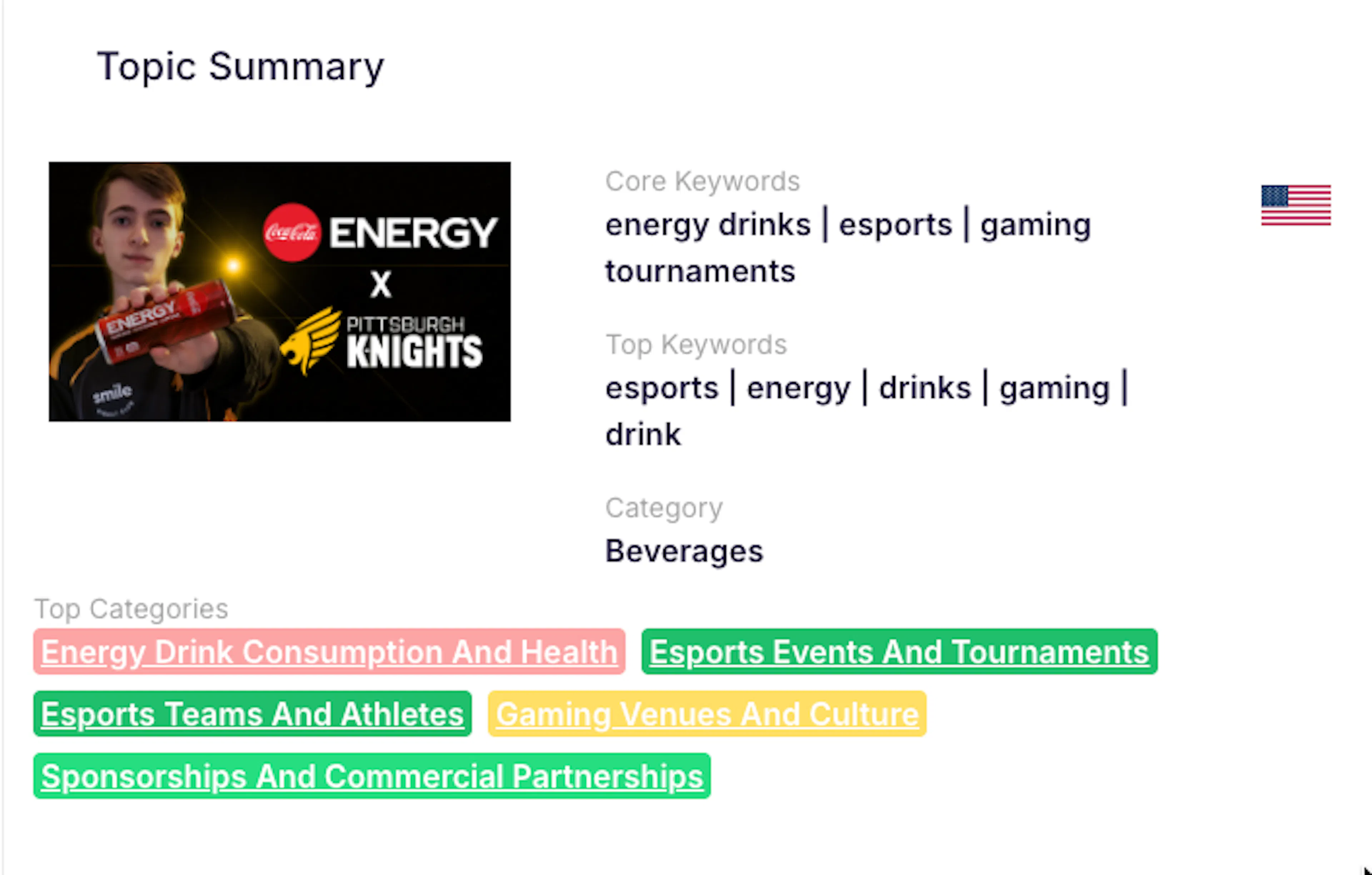
The anchor card, and it's worth noting how much ground it covers before a single chart appears. A Core Keywords field can hold more than one term at once, "energy drinks," "esports," and "gaming tournaments" together, for instance, when your research question is really about an intersection rather than a single subject. Top Keywords narrows that down to the individual words appearing most often across the conversation ("esports," "energy," "drinks," "gaming," "drink"), a quick check on which side of that intersection is actually driving the volume before you've looked at anything else. The Category places the topic in its broader market (Beverages), and Top Categories lists the specific themes the conversation actually breaks into: Energy Drink Consumption and Health, Esports Events and Tournaments, Esports Teams and Athletes, Gaming Venues and Culture, and Sponsorships and Commercial Partnerships.
These chips aren't just labeled, they're color-coded by sentiment, using the same scale the Categories chart uses further down the report. Energy Drink Consumption and Health appears in a warmer color here because it skews lower once you reach that chart; Esports Events and Tournaments, Esports Teams and Athletes, and Sponsorships and Commercial Partnerships appear in green because they skew positive; Gaming Venues and Culture sits in yellow, reflecting a genuinely mixed response. In other words, this card isn't just a preview of what topics the report covers, it's a preview of how each one is actually being received, before you've scrolled any further.
Key Takeaways
A side-by-side summary of the strongest signals in either direction, five positive threads set against five worth watching more closely, distilled from everything the report found.
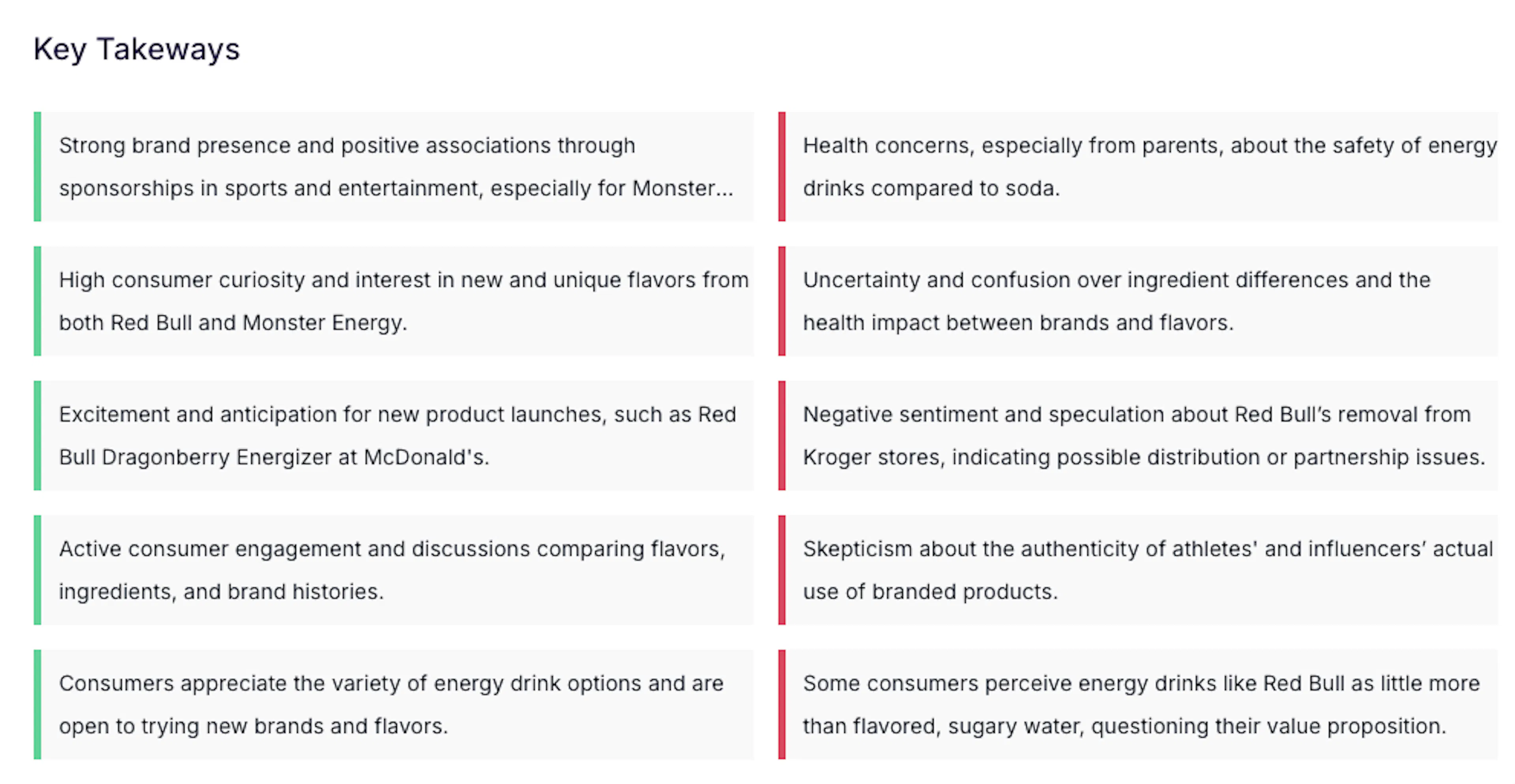
For an energy drink brand, the positive column might surface strong consumer engagement fueled by a celebrity association, or a growing appetite for cleaner, more natural formulations, while the column beside it flags concern over sugar and caffeine content, or disappointment tied to a missed sponsorship. Neither side cancels the other out; they're meant to be read together, as the honest shape of a conversation rather than a single verdict. Read this card first. It's built as an executive-level orientation, so everything below it has context before you reach the detail.
Consumer Voice
Not everyone talking about a topic is talking in the same way, and this donut chart is where that distinction becomes visible.
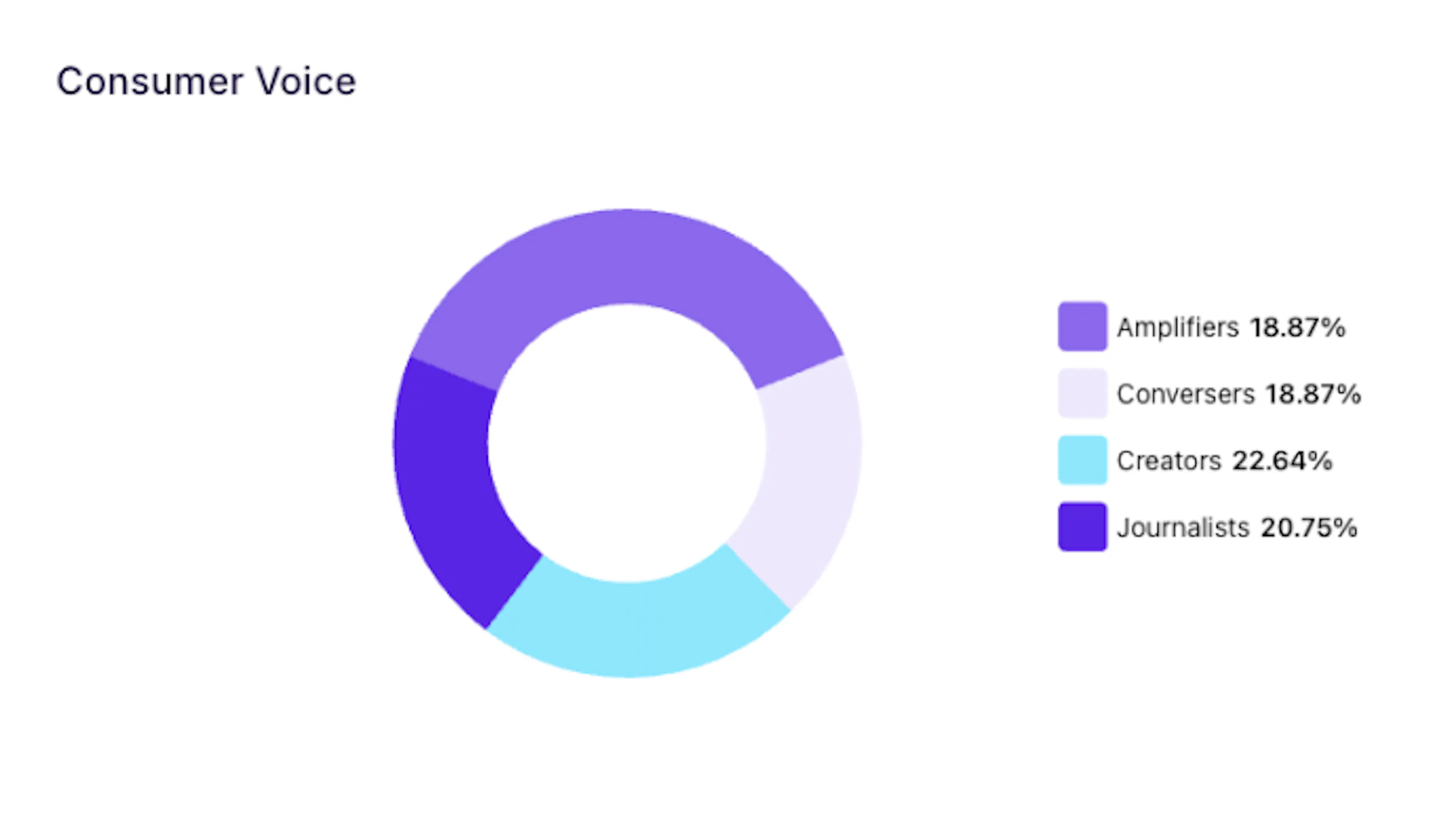
It splits mentions into four roles:
- Amplifiers, who spread and boost conversation that already exists;
- Conversers, ordinary consumers engaging directly;
- Creators, producing original content about the topic; and
- Journalists, media and press.
A fairly even split, say, Amplifiers, Conversers, and Creators each holding around a fifth of the total, with Journalists trailing slightly behind, describes a conversation that's genuinely organic and consumer-driven, not one being carried by a handful of outlets or influencers. A chart weighted heavily toward Journalists instead would tell a very different story, and call for a different response: press outreach and correction over community engagement.
Platform
A bar chart of mention volume by platform, Facebook, Reddit, TikTok, YouTube, Instagram, and others depending on the topic, ranked from most to least active.
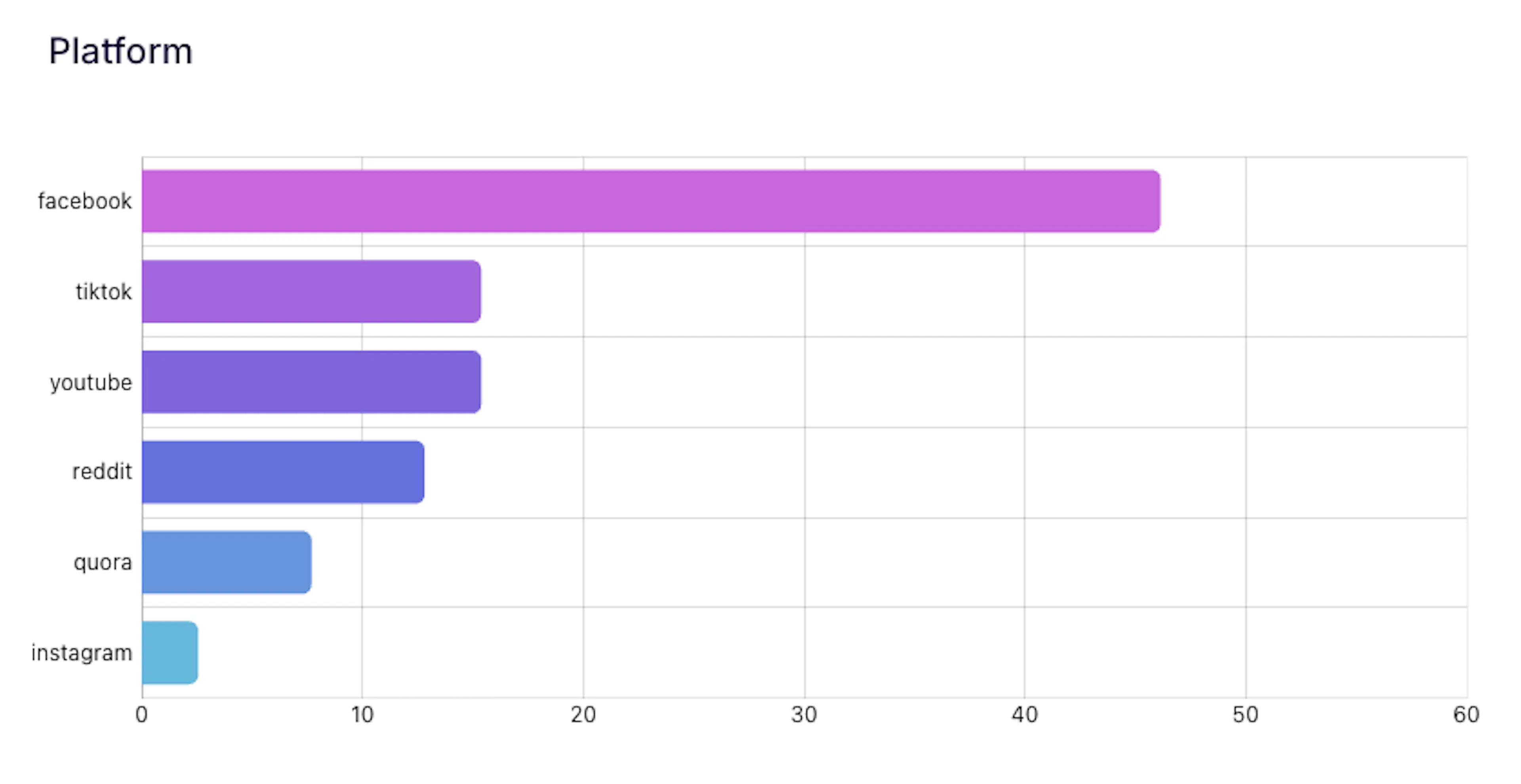
Facebook leading by a wide margin, with Youtube and TikTok both carrying a meaningful share behind it and Reddit, Quora, and Instagram trailing, tells you where to actually spend your listening and response effort. A team monitoring Instagram closely while the real conversation is happening on Reddit is solving the wrong problem, however good their Instagram monitoring is.
Categories, Read Through Sentiment
The Top Categories from the summary card return here, crossed against a 1-to-5 star sentiment scale in a stacked bar chart, and this is where the report stops describing what people are talking about and starts describing how they feel while they're doing it.
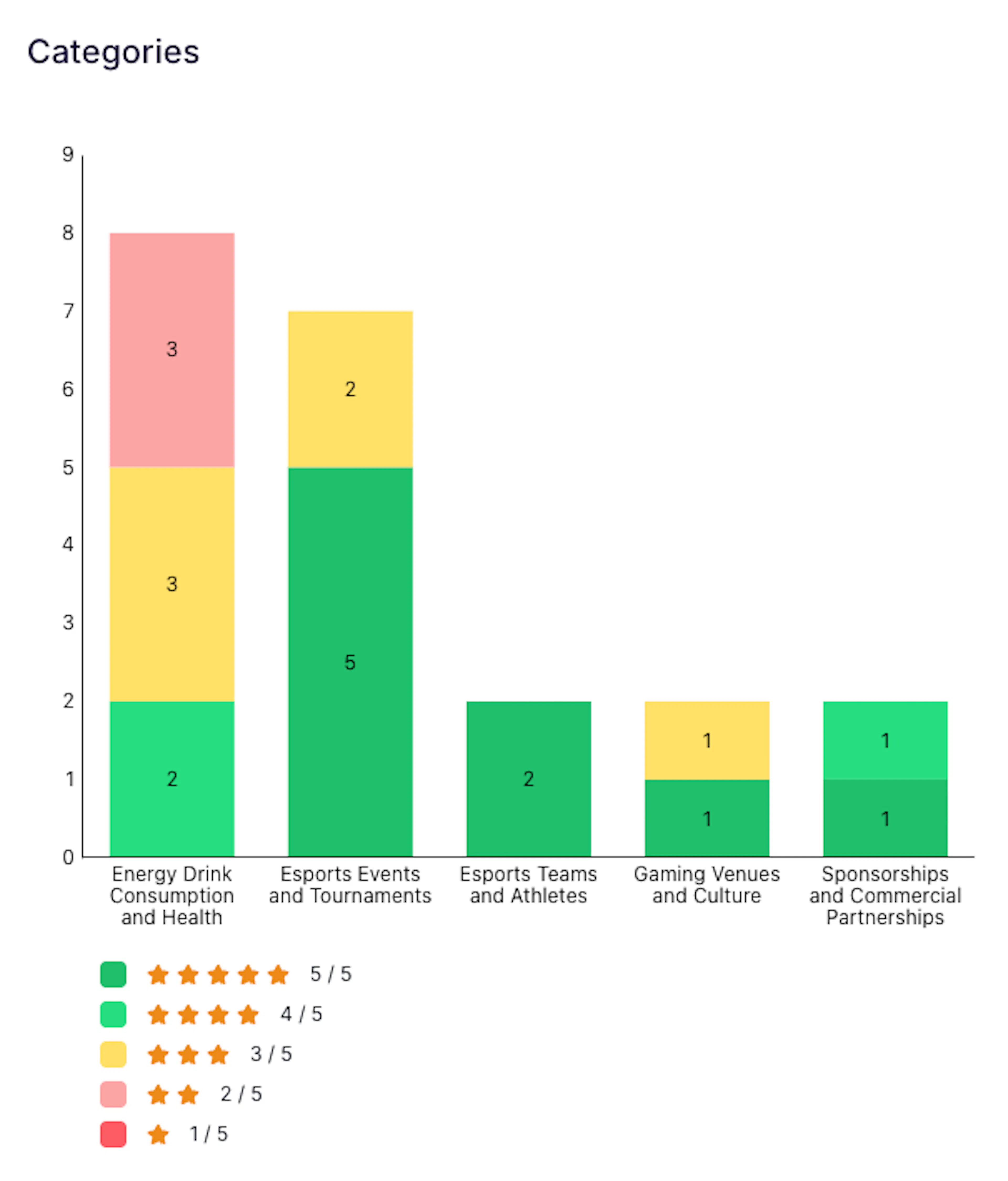
Two categories sitting side by side can tell opposite stories. Take Energy Drink Consumption and Health: it has 8 mentions total, but not one of them hits 5 stars. They land at 2, 3, and 4 stars instead, real volume, but no genuine high point. Now compare Esports Events and Tournaments: 7 mentions, and 5 of those are a perfect 5 stars. The rest sit at 3. That's a clearly positive category.
Topical Keywords & Summary
A word cloud built from the language of the mentions themselves, sized by frequency, with the same left-click-to-select, right-click-to-exclude interaction found in Intent Insight's Top Themes card.
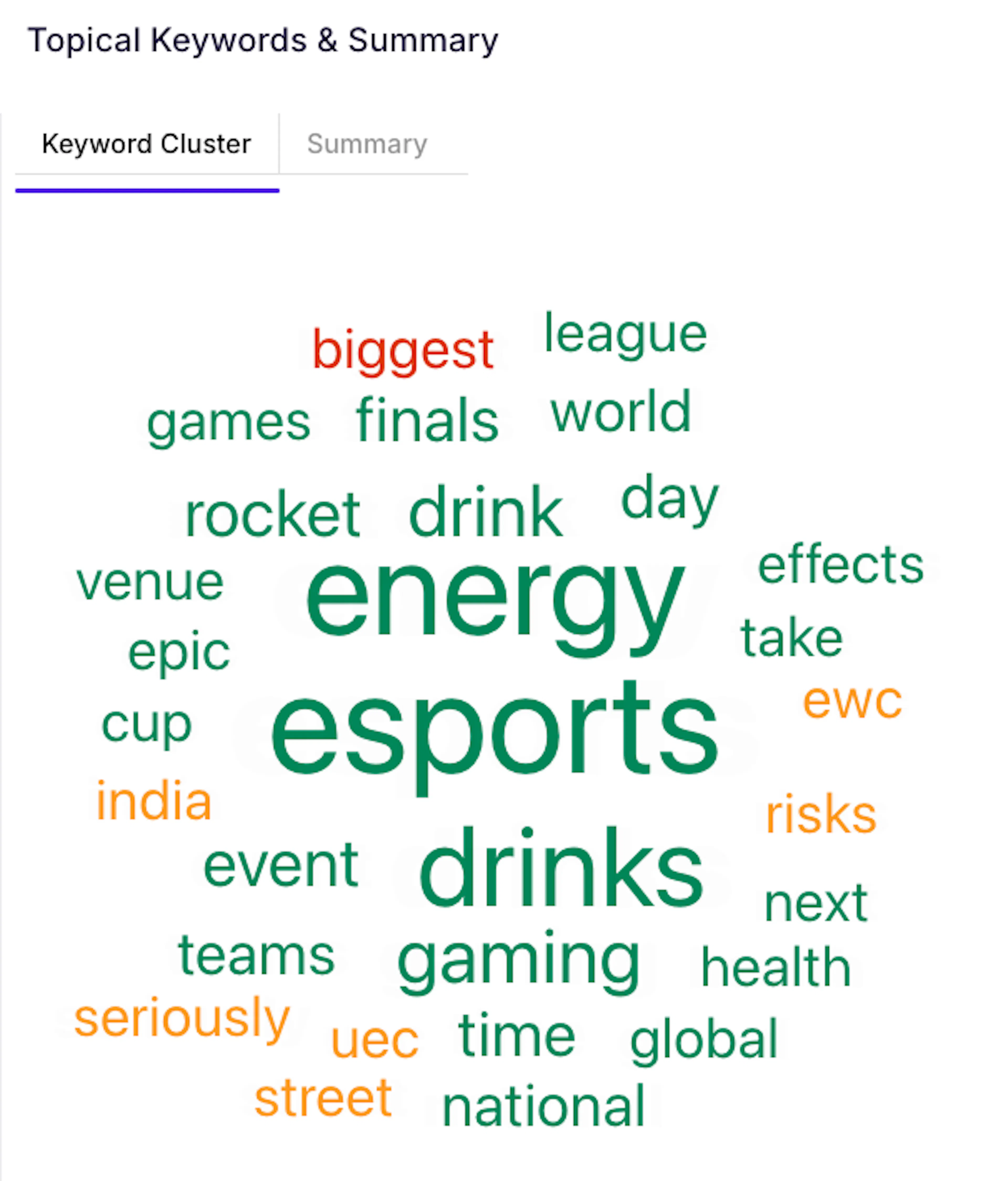
In the cloud, the largest words are often the obvious ones, "energy" and "esports" dominating a conversation about energy drink sponsorship in competitive gaming, for instance. What's more useful is what surrounds them at a smaller size: terms like "risks," "effects," and "health" clustered together point directly at a health-and-safety thread running through the conversation, while "league," "finals," "teams," and "venue" point at the esports and event side of the same topic, two genuinely different conversations sitting inside one word cloud. Excluding an overly dominant term is often the fastest way to see that underlying detail clearly, since one word crowding the center can make everything smaller around it harder to read at a glance.
Reviews and Comments
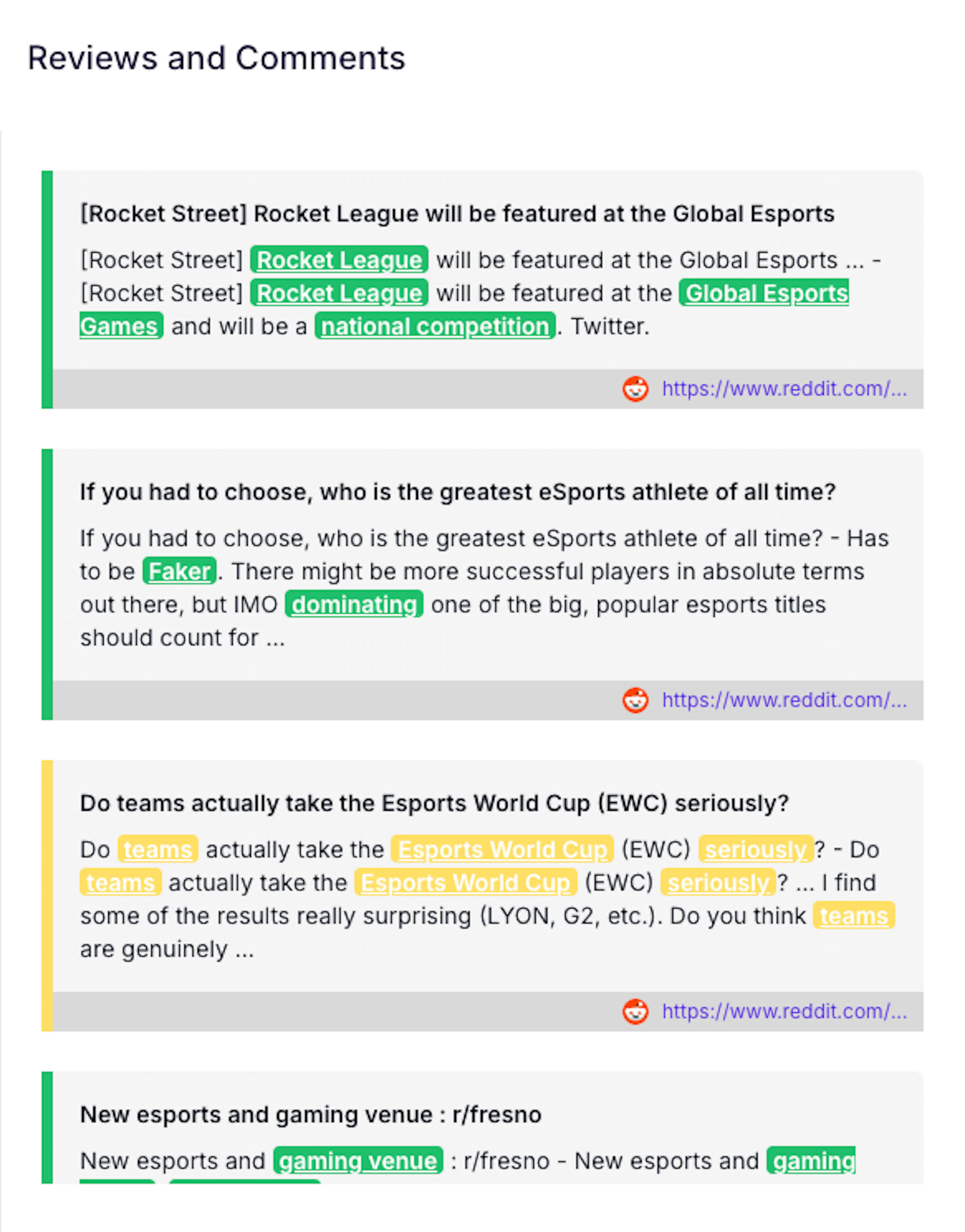
A scrollable feed of actual posts and comments, pulled directly from the platforms measured above, with key phrases highlighted inline, a brand name, a product mention, a specific line worth noticing.
What Mentions Insight Will Not Tell You
A Mentions report describes perception, not identity or active demand. It will not tell you who this audience is demographically (that's Behavior Insight), or what they are actively searching for right now if the conversation hasn't caught up to it yet (that's Intent Insight).